
Marine radars
A marine radar uses radio waves to detect objects around your vessel such as coastlines, other boats, buoys, and weather systems — even in darkness, fog, or heavy rain. It works by sending out radar pulses that reflect off surrounding objects and calculates their distance and direction, displaying them in real time on your chartplotter or radar screen.
Radome radar (also called closed dome) are compact, enclosed units ideal for smaller boats or sailboats where space and power efficiency are key. Open array radar are larger, bar-shaped antennas offering superior range, target separation, and clarity — perfect for yachts and commercial vessels.
Modern radar systems feature solid-state or Doppler technology, delivering fast target tracking, automatic collision alerts, and integration with GPS and AIS for complete situational awareness. Whether you’re navigating a busy harbor or offshore waters, marine radar keeps you aware of your surroundings and enhances safety at sea.
Navigate safely in all conditions with our range of marine radar systems from Raymarine, Garmin, and B&G.
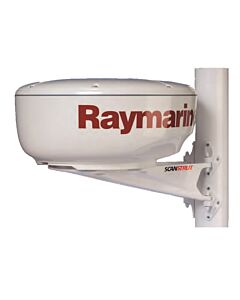 Raymarine Scanstrut Mast Mounting Bracket for 24" Radome Scanner M92698Special Price €523.26 Regular Price €562.65
 Scanstrut Self Levelling Mast Mount for 18"/24" Radome Scanner X10000-SCASpecial Price €1,655.76 Regular Price €1,881.55
 Raymarine Quantum 2 Q24D Doppler 18" Radar without Power or Data Cable E70498Special Price €2,608.16 Regular Price €2,897.95
 Raymarine Quantum Q24C 18" Radar with 10m Power Cable E70210Special Price €2,172.56 Regular Price €2,413.95
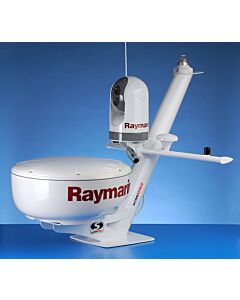 Raymarine Scanstrut PTM-R1-1 Tapered Radar Mast A80147Special Price €2,714.03 Regular Price €2,895.00
- Raymarine Quantum Q24C 18" radar with 10m power and data cable T70243Special Price €2,281.46 Regular Price €2,534.95
 Raymarine RD418HD 4kW Color 18" radome antenna E92142Special Price €2,880.41 Regular Price €3,200.45
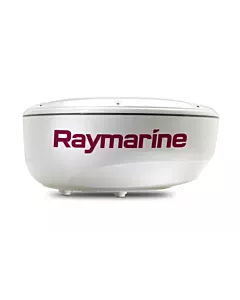 Raymarine RD418HD 4kW Color 18" radome antenna (10m power and data interconnect cable included ref. A80228) T70168Special Price €2,934.86 Regular Price €3,260.95
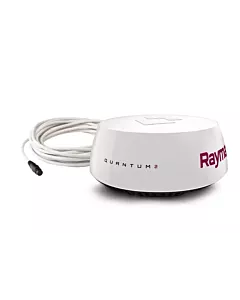 Raymarine Quantum 2 Q24D Doppler 18" radar with 10m power and data cable T70416Special Price €2,662.61 Regular Price €2,958.45
 Raymarine RD424HD 4kW Color 24" radome antenna E92143Special Price €3,533.81 Regular Price €3,926.45
 Raymarine RD424HD 4kW Color 24" radome antenna incl. A80228 (10m power and data interconnect cable) T70169Special Price €3,588.26 Regular Price €3,986.95
- Raymarine Quantum Q24C 18" radar with 15m power and data cable T70266Special Price €2,335.91 Regular Price €2,595.45
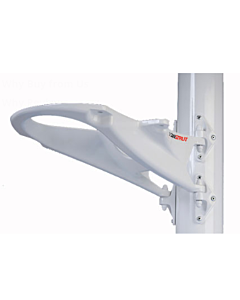 Raymarine SC20 Mast Mount Bracket for Quantum Radome Scanner A80382Special Price €447.70 Regular Price €477.95
 Raymarine 45STV 45cm Satellite TV System (B4) with AutoSkew for Europe E70466Special Price €6,383.48 Regular Price €7,253.95
 Raymarine Magnum 4ft Array only E70490Special Price €1,687.95 Regular Price €1,875.50
 Raymarine Magnum 6ft Array only E70491Special Price €2,232.45 Regular Price €2,480.50
 Raymarine 4kW Magnum Radar with 4ft Open Array and 15m RayNet Radar Cable T70408Special Price €6,543.20 Regular Price €7,435.45
 Raymarine 4kW Magnum Radar with 6ft Open Array and 15m RayNet Radar Cable T70410Special Price €7,075.60 Regular Price €8,040.45
 Raymarine 12kW Magnum Radar with 1.2m Open Array and 15m RayNet Radar Cable T70412Special Price €8,140.40 Regular Price €9,250.45
 Raymarine 12kW Magnum Radar with 1.8m Open Array and 15m RayNet Radar Cable T70414Special Price €8,992.24 Regular Price €10,218.45
- Raymarine Quantum 2 Q24D Doppler 18" radar with 15m power and data cable T70417Special Price €2,656.68 Regular Price €3,018.95
 Raymarine Magnum 4 kW Pedestal with VCM100 E70484Special Price €5,004.56 Regular Price €5,687.00
 Raymarine Magnum 12 kW Pedestal with VCM100 E70487Special Price €6,642.90 Regular Price €7,381.00

What is a marine radar?
A marine radar uses radio waves to detect objects around your boat. The radar transmits a signal, which reflects off objects such as ships, coastlines, buoys, or rain squalls and returns to the radar antenna. These echoes are processed and displayed on a compatible chartplotter or multifunction display (MFD).
Marine radars provide real-time information about:
- Nearby vessels and traffic
- Coastlines and land contours
- Buoys and navigation aids
- Weather cells and rain
- Relative distance and bearing of targets
Why a marine radar is important
1. Safe navigation in poor visibility
Radar allows you to “see” when visibility is reduced by fog, rain, darkness, or haze.
2. Collision avoidance
By tracking moving targets, radar helps you assess collision risks and make timely course adjustments.
3. Offshore and night navigation
Radar is especially valuable offshore and during night passages when visual references are limited.
4. Weather awareness
Modern radars can detect rain squalls and storm cells, helping you anticipate changing conditions.
How does a marine radar work?
Marine radar systems:
- Transmit short bursts of radio energy
- Receive reflected signals from objects
- Calculate distance based on signal return time
- Display targets relative to your vessel
Modern digital radars use advanced signal processing to improve target clarity, reduce clutter from waves and rain, enhance small or weak targets.
Types of marine radar systems
Radome radar
Radome radars house the rotating antenna inside a sealed dome.
Characteristics
- Compact and lightweight
- Lower power consumption
- Easier installation
- Clean, modern appearance
Best for: small to medium-sized boats, sailing yachts, and space-limited installations.
Open array radar
Open array radars use a rotating antenna mounted on an exposed array.
Characteristics
- Higher transmission power
- Longer detection range
- Better target separation
- Superior performance in offshore conditions
Best for: larger boats, motor yachts, and offshore navigation.
What is the difference between solid-state radar and magnetron radar?
Solid-state Doppler radar
Solid-state radar uses modern solid-state transmitters instead of a traditional magnetron. These radars offer instant start-up, lower power consumption, and enhanced target detection.
Doppler technology is often combined with solid-state radar designs. With Doppler processing, moving targets can be highlighted and colour-coded, making it easier to identify collision risks and track vessel movement.
Solid-state Doppler radars are especially valued for:
- Clear target separation at short and medium range
- Improved situational awareness
- Quiet, low-maintenance operation
Magnetron radar
Magnetron radar is the traditional radar technology used in marine navigation. It provides high transmission power and long detection range, making it well suited for offshore and long-range use.
Magnetron radars are known for:
- Strong long-range performance
- Reliable operation in demanding conditions
- Proven technology used for decades
Which radar brands are recommended?
Raymarine
Raymarine radars are known for advanced target processing, intuitive controls, and seamless integration with Raymarine chartplotters.
B&G
B&G radars are optimised for sailing performance, offering excellent target clarity and offshore reliability.
Garmin
Garmin radars deliver powerful performance with user-friendly interfaces and strong integration across the Garmin ecosystem.
Radar mounting options
Consider: Correct height, alignment, and cable routing are essential for optimal radar performance.
- Mast mounting: Common on sailing yachts, providing excellent height and range.
- Radar arch mounting: Popular on motorboats, offering a stable and elevated platform.
- Pole or bracket mounting: Ideal for boats without masts or arches.
Seashop also offers radar mounts, cables, and installation accessories to ensure a safe and reliable setup.
How to choose the right marine radar?
1. Boat size and type
Smaller boats typically benefit from radome radars, while larger vessels may require open array systems.
2. Sailing area
- Inland & coastal → compact radome radar
- Offshore → high-performance open array radar
3. Integration requirements
Ensure compatibility with your existing chartplotter or navigation system.
4. Mounting possibilities
Available mounting locations may influence radar type and size.
5. Power availability
Consider power consumption, especially on sailing yachts.